Agronomic value of snow: moisture, protection and productivity.
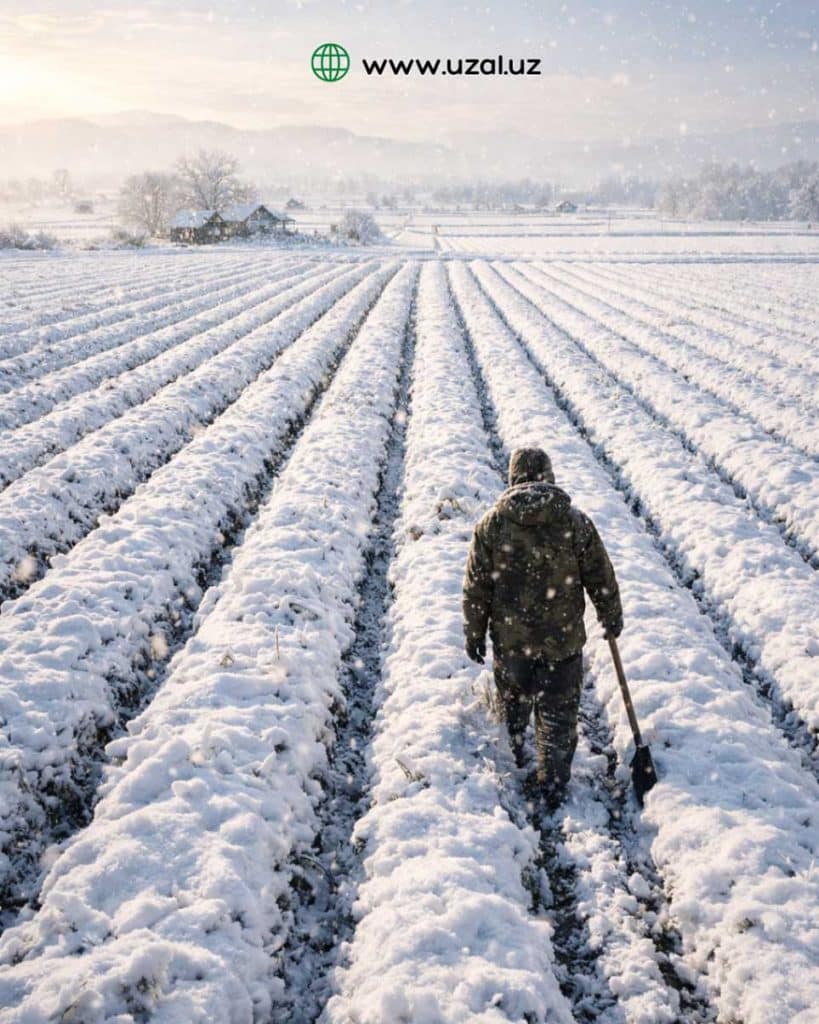
It is known that active agrotechnical work in the fields temporarily stops during the winter season. The surface of the earth is covered with white snow and becomes calm. However, extremely important processes for agriculture continue under this silence.
Snow is not just precipitation. If it rains at the right time and in sufficient quantity, it is a real source of blessing for agriculture. Often in practice, the "10:1" rule is used, and 10 cm of snow is considered equal to 1 cm of liquid water. But in practice, the density and moisture of the snow is different. In some cases, the snow is dry, light and fluffy, and the amount of water is low. Sometimes the snow is wet and heavy, and only 3-5 cm of snow can equal 1 cm of liquid water. This difference has a direct impact on the productivity of the next season. (https://metos.global/en/snow-advantages-and-disadvantages/)
In winter, snow acts as a natural protective layer for the soil. Even at −15...−20°C, the soil temperature under the snow remains around 0°C. This protects winter crops such as wheat, barley, and rice planted in the fall from frost and prevents them from dying. Also, the snow layer protects the soil surface from wind and water erosion.
Snow enriches the soil not only with moisture, but also with atmospheric nitrogen, nitrate and ammonium. Absorption of these substances into the soil with snow serves as a natural source of nutrients for crops.
In early spring, especially as a result of the gradual melting of snow with a high water equivalent, the soil is sufficiently moistened. This creates a solid foundation for the development of the root system of plants and ensuring high productivity.