Agrotechnical activities that need to be carried out in grain fields in May.
Due to the complicated course of the spring season this year, as a result of the large amount of precipitation, the humidity of the soil and air has increased, which has a significant effect on grain crops. This creates favorable conditions for the widespread spread of various harmful insects and diseases such as yellow rust, brown rust, septoriosis, powdery mildew. These factors pose a serious threat to grain development and productivity.
Especially when the yellow rust disease is very damaging, the yield can be reduced by 50-60%. Therefore, in the current weather conditions, in order to grow an abundant and high-quality harvest, it is necessary to approach the agrotechnical activities carried out in May with special responsibility.
In May, the main stages of development of autumn grain are observed - earing, flowering, and milk-wax ripening period. Taking into account these phases, it is necessary to organize all agrotechnical activities on the basis of a clear plan and schedule.
It is important to feed with nitrogenous fertilizers in the periods of grain earing, flowering, grain formation and grain filling. It is recommended to give nitrogen fertilizers in the amount of 100-150 kg per hectare in addition to the areas planted late or with slow development. At the same time, in order to improve grain quality in May, it is more effective to use biological nitrogen fertilizers than mineral fertilizers. In particular, "Baktomin" biological fertilizer is applied by spraying at the rate of 2 liters per hectare.
Physiological and biochemical processes of plants slow down in areas affected by fungal diseases, as a result of which their resistance to unfavorable factors of the external environment decreases. This leads to a sharp decrease in yield and grain quality. Therefore, it is necessary to immediately treat the areas where the disease is detected.
In the fight against yellow rust disease, it is important to first determine the level of damage. It is advisable to start processing from the most affected areas and apply fungicides 20-30 ml/ha more than the prescribed rate. In this case, biological fungicides are more effective than chemical agents. For example, "Sporagin" biofungicide provides long-term protection when applied at the rate of 2-3 liters per hectare.
After 10-12 days, depending on the level of damage, re-treatment should be carried out in the areas treated against the disease. If the specified schedule is not followed and the processing is transferred to other fields, the expected result cannot be achieved.
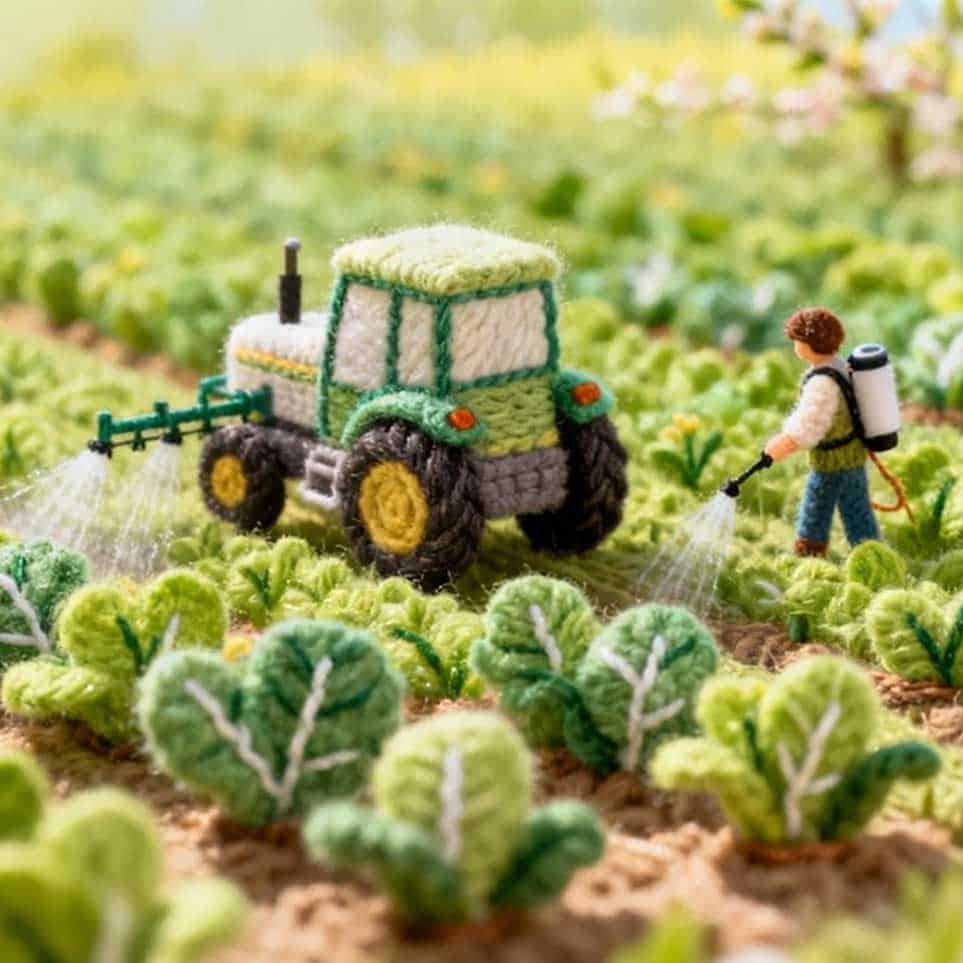
It is recommended to use boom sprayers when processing grain fields. If this possibility is not available, it is necessary to lower the angle of the spray in OVX devices and ensure that the solution reaches the lower part of the leaves. Because biofungicides are effective only when they directly affect the spores of the disease on the surface of the plant.
Also, the following insecticides are effective in combating pests such as aphids, aphids, stem borer, grain thrips and grain sap: "Alphatsid" (0.15 l/ha), "Bestseller" (0.1-0.15 l/ha), "Dalate Plus" (0.07 l/ha), "Detsis" (0.25 l/ha), "Detsiban" (0.25 l/ha), "Bagira", "Atilla" (0.2 l/ha). These preparations are used at the expense of 200-300 liters of working solution.
Wheat practically does not change its color and shape from earing to ripening. After ripening, when sorting is carried out, it will be possible to separate only according to the type (with or without buds). In this process, the possibility of spike breakage and grain spillage increases, which can cause a decrease in yield.